
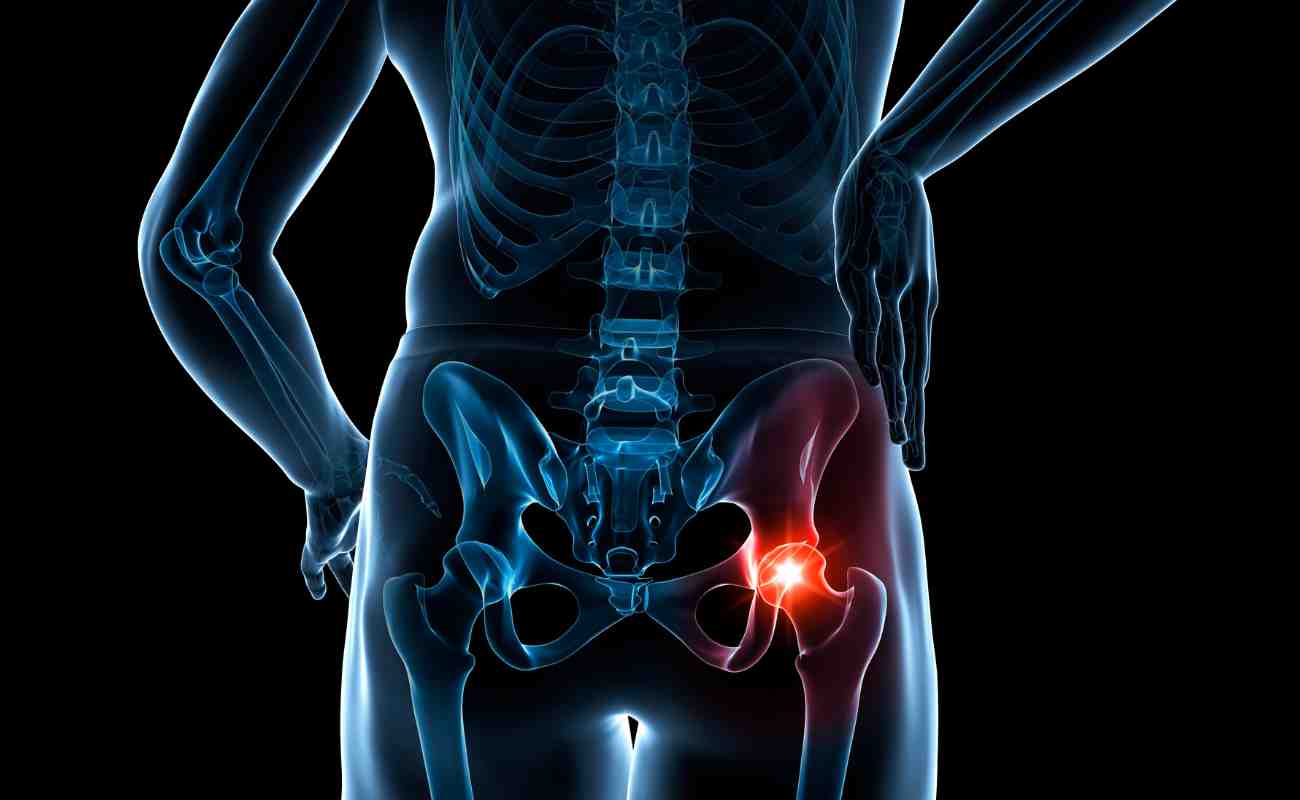
A surgeon told me I'd probably need surgery on my hip. The pain was chronic, it wasn't going away on its own, and the conventional rehabilitation kit I'd been given, Copenhagen planks, clamshells, pistol squats, wasn't moving the needle. On paper they hit the right muscles. In practice, my hip kept failing in the positions those exercises never asked it to handle.
I didn't end up having the surgery. What changed wasn't more reps of the same exercises, it was a completely different way of asking what the hip is actually for, and training it inside that context. This is the version of that story I wish I'd been told earlier.
Copenhagens, clamshells, pistol squats
The standard exercises aren't wrong, exactly. They isolate the right muscles. The problem is they don't load the hip in any of the positions where my hip was actually failing, and they didn't go nearly far enough in understanding the dynamics of how my hip was supposed to work in the first place.
Side-lying glute med work. Adductor planks. A single-leg squat to depth on a bench. All of them are sagittal or frontal-plane drills, mostly with the load directed vertically through the hip in deep flexion. You can grind through them, get sore, and feel like you're doing the work.
I don't walk in deep hip flexion with a vertical load. Nobody does. Walking is horizontal force production with rotation through a relatively shallow hip range, which is the exact context none of those drills were rehearsing. My hip kept hurting because I kept walking, and walking kept asking it for something it had never been re-taught to deliver.
Can the glute function in gait-shaped contexts?
What changed was the question. Instead of "is the glute strong?" we started asking "can the glute fire in the positions and force directions that resemble walking?" That's a much harder question, and answering it took a systematic assessment, not a workout.
Ribcage stacked over pelvis, leg behind hip, a small trunk rotation, stance phase of gait. Could the glute produce force in that shape? On video, frame by frame, against a horizontal ground reaction force, with the rest of the body in the position it would be in during a normal stride. Most of the time, the answer was no.
Drills that respect those constraints, contralateral loading, banded resistance angled like ground reaction forces, hip extension with the trunk in a gait-shaped rotation. The reps look unfamiliar because they're not pulled from a generic strength template. They're pulled from what gait actually demands.
Loads have direction
I started university in civil engineering before I moved into training, and the more I worked through this hip rehab the more it felt like first-year structural mechanics. Loads have direction. A column designed for axial compression fails the moment you ask it to carry a sideways moment it was never built for. Bones, joints, and connective tissue are no different.
Standing on a leg and pushing forward is a different load case to standing on a leg and pressing down. Same muscles on paper, different forces, different positions, different demands on the joint capsule. If you train for one and need the other, you don't get transfer, you get a hip that's strong in a context it never has to perform in.
Most gym training primes the body in vertical, sagittal directions. Walking, running, and almost everything you do in the real world are horizontal and rotational. Moving up and down doesn't help you walk better, and that's not an opinion, it's a load-direction mismatch.
Adaptability isn't a permanent licence
When you're young you can get away with a lot. Neuroplasticity is high, tissue tolerance is high, and the body will quietly compensate around training that doesn't quite fit its anatomy. As you age, that buffer shrinks. The same mismatched loading that did nothing visible at twenty starts to compound, and the hip, or the knee, or the back, quietly becomes the bill payer.
It's not that you stop being able to train hard. It's that you stop being able to absorb training that doesn't respect the load directions your body is built around. The margin for error gets thinner. Generic programmes that worked at twenty-five start producing injuries at forty-five.
Train inside the load directions you actually live in. Walking, rotating, single-leg stance under horizontal force. That alignment with basic biological anatomy isn't optional once the adaptability buffer is gone, it's the whole game.
The surgery never happened.
The hip pain resolved. Not because I worked harder on the same drills, and not because the surgeon was wrong about the imaging, they probably weren't. It resolved because the training finally matched what the hip was being asked to do every day. Walking. Rotating. Producing horizontal force on a single leg, in a stacked position, against the ground. That's where the hip lives. That's where it has to be strong.
If you're working through chronic hip pain and the standard rehabilitation kit isn't getting you there, the question to ask isn't "am I doing enough Copenhagens?" It's "is anything I'm doing rehearsing the position my hip actually fails in?" Most of the time, the answer is no, and that's not a discipline problem. It's a load-direction problem.